Opens in a new tab

Easy Persian Beef and Green Bean Rice: A Flavorful Family Dinner

TOTAL TIME
SERVES
COURSE
DIFFICULTY
Tested5× before publishing

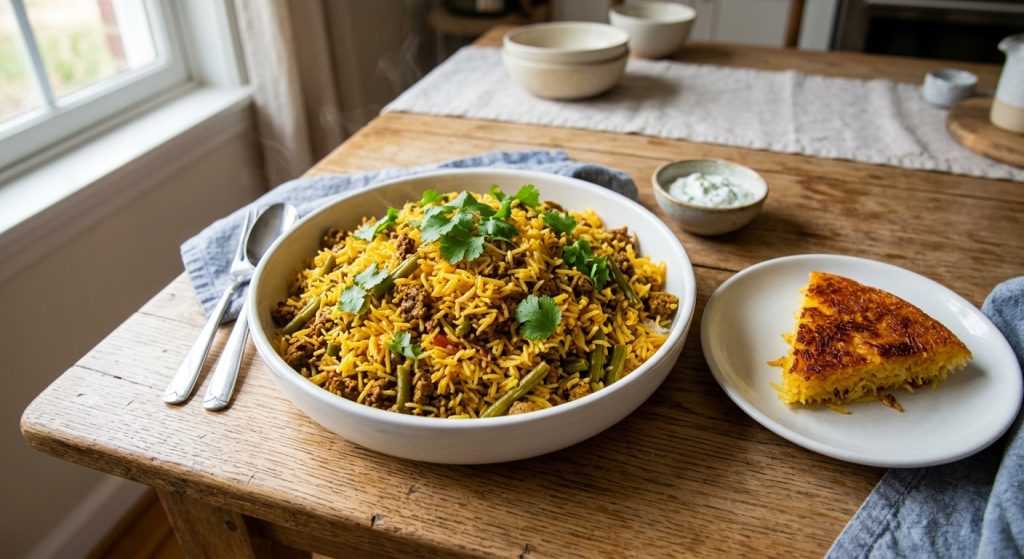
Hey everyone! I’m so excited to share what I made last night for dinner – this incredible Persian beef and green bean rice, also known as Loobia Polo. Seriously, it’s one of those dishes that just feels special, but don’t let the name intimidate you because it’s totally doable even on a busy weeknight. It takes a little bit of time, yes, but most of that is hands-off steaming, so you can totally tackle other things while the magic happens.

I’ve been testing this recipe to get it just right, and it absolutely delivers on flavor. The fragrant basmati rice, tender ground beef, and crisp-tender green beans all come together with warm spices like turmeric and cinnamon. And the best part? That amazing crispy rice crust, called tahdig, at the bottom of the pot. It’s truly a treat and makes the whole family want to fight over the last piece!

The Foundation: Prepping Your Rice and Saffron

Okay, let’s talk rice! Basmati is non-negotiable here; its long grains are just perfect for this kind of dish, separating beautifully when cooked. The first, and super important, step is rinsing. You’re not just giving it a quick splash; you need to rinse the rice under cold running water, stirring with your fingers, then draining, and repeating that whole process until the water pouring off the rice is completely clear. This can take 5-7 rinses sometimes, but it’s crucial for getting rid of excess surface starch. If you skip this, your rice will likely turn out gummy and clumpy, which is the exact opposite of what we want for a fluffy Loobia Polo.

After rinsing, the rice needs a good soak. Just cover it with cold water and let it hang out for at least 30 minutes. This helps the grains hydrate evenly, so they cook through without bursting, giving you that lovely, distinct texture. While your rice is having its spa day, you’ll want to get your saffron ready. Saffron threads are delicate but packed with flavor and color. To really get the most out of them, we ‘bloom’ them. Just stir the finely ground threads into a small amount of warm water and let it sit. You’ll see the water turn this beautiful, vibrant golden-orange color as the saffron releases its magic. This liquid is going to infuse so much character into both the meat sauce and, later, our incredible crispy tahdig layer. Don’t rush these first few steps; they truly set the stage for success!

Building Your Flavorful Persian Beef and Green Bean Rice

Now that your rice and saffron are sorted, it’s time to create the heart of our Persian beef and green bean rice dish: the rich, aromatic meat and green bean sauce. Start by heating your olive oil in a big skillet – you want plenty of room for everything. The diced onion goes in first; we’re looking for a soft, golden glow here, not deep brown. Caramelizing the onions slowly brings out their natural sweetness and forms a fantastic base for the whole dish. Don’t rush this part; patience pays off in flavor! Once the onions are ready, stir in the garlic. It only needs about 30 seconds to become fragrant – you don’t want it to burn, which can make it bitter.

Next comes the ground beef. Break it up with your spoon as it cooks. You want it nicely browned, with no pink bits left. After the beef is cooked through, sprinkle in the ground turmeric and cinnamon. These warm spices are what give this dish its distinctive Persian flair. The turmeric adds a lovely earthy note and a hint of color, while the cinnamon brings a subtle sweetness and depth that pairs wonderfully with the beef. Stir in the tomato paste, letting it cook for a minute or two to deepen its flavor, then add your trimmed green beans, the cinnamon stick, and the water. A good squeeze of fresh lemon juice brightens everything up, and don’t forget that first half of your bloomed saffron water. Let this simmer gently until the liquid reduces and you have a rich, thick meat and green bean mixture. This concentration of flavor is key before we even think about layering it with the rice!

The Art of Layering and the Crispy Tahdig Secret

Alright, you’ve got your perfectly prepped rice and your savory meat and green bean sauce. Now for the exciting part – bringing it all together and creating that legendary tahdig! First, you need to parboil your soaked rice. Get a big pot of heavily salted water boiling – it should taste like the ocean. Add your drained rice and cook it for just 5 to 7 minutes. We’re not cooking it all the way through here; it should still have a firm bite, an al dente texture. Immediately drain it. Overcooking the rice now will lead to mushy results later, and nobody wants that.

The tahdig, that golden, crispy rice layer at the bottom, is truly a highlight. In a separate bowl, gently mix about 1 ½ cups of your parboiled rice with the remaining bloomed saffron water. This gives the tahdig its signature color and incredible aroma. In your rinsed, large non-stick pot, pour in the neutral oil and spread it out. Evenly press your saffron rice into the bottom of the pot. This forms the base. Then, you’ll start alternating layers of the plain parboiled rice with generous spoonfuls of your beef and green bean sauce, building it into a gentle pyramid shape. This pyramid helps the steam circulate. Don’t press the layers down; keep them light and airy. Finally, poke about five holes straight down through the rice to the bottom of the pot with a spoon handle. These are crucial steam vents. Lid on, wrap it with a tea towel (to trap every bit of steam!), and let it steam on low heat for an hour. That slow steam, combined with the oil and low heat, is what creates the magical, crunchy tahdig. Patience here is absolutely essential – no peeking!
AD — Mediavine Content 300×250 / Responsive

Why This Recipe Works

This recipe works because it builds flavor in layers. Soaking and parboiling the basmati rice ensures fluffy grains that absorb the delicious meat sauce. The slow simmer of the beef and green bean mixture concentrates the spices, while the final steaming allows all the aromas to meld. The careful preparation of the tahdig, with its initial oil and saffron rice layer, creates that sought-after crispy crust by allowing moisture to escape while slowly toasting the bottom layer of rice.

That incredible crispy rice crust, called tahdig, at the bottom of the pot is truly a treat and makes the whole family want to fight over the last piece!— Charlotte
AD — Mediavine Native / 728×90 Leaderboard

Prep 30 minutesCook 1 hour 45 minutesYield 8 servings
Ingredients
  • 3 cups basmati rice
  • 1/8 teaspoon finely ground saffron threads
  • 1 3/4 cups water, divided, plus extra to cook rice
  • 2 tablespoons extra virgin olive oil
  • 1 large onion, finely diced
  • 2 garlic cloves, grated or minced
  • 1 pound ground beef
  • 1 teaspoon ground turmeric
  • 1 teaspoon ground cinnamon
  • 1 tablespoon tomato paste
  • 1 pound green beans, trimmed and cut into 1/2-inch pieces
  • 1 medium cinnamon stick
  • 4 teaspoons kosher salt, divided
  • 1/2 teaspoon freshly ground black pepper
  • 1/2 lemon, juiced
  • 3 tablespoons neutral oil (like vegetable or canola oil)
Instructions
  1. Prep the Rice Rinse the basmati rice in cold water, draining it well. Keep repeating this step until the water runs completely clear, which gets rid of extra starches. Then, put the rinsed rice in a bowl and cover it with plenty of fresh cold water, letting it soak for at least 30 minutes. This soaking time is super important for getting those perfectly fluffy, separate grains later on!
  2. Bloom the Saffron While your rice is soaking, grab a small bowl and stir the finely ground saffron threads into 1/4 cup of water. Let it sit; this helps the saffron release all its beautiful color and aroma.
  3. Make the Sauce Base Heat the 2 tablespoons of olive oil in a large skillet over medium-high heat. Add your finely diced onion and cook, stirring occasionally, until it turns a lovely golden color, about 5 minutes. Stir in the minced garlic for about 30 seconds until fragrant, then add the ground beef, breaking it up with a spoon as it cooks until it’s browned all over.
  4. Add Beans and Seasoning Once the beef is nicely browned, stir in the ground turmeric and ground cinnamon. Mix in the tomato paste, really making sure it gets distributed. Next, add the green beans, the cinnamon stick, and the remaining 1 1/2 cups of water. Season everything with 1 teaspoon of kosher salt, the black pepper, the fresh lemon juice, and half of that beautiful bloomed saffron water you prepared earlier.
  5. Simmer the Sauce Reduce the heat to low, cover the skillet, and let the mixture simmer gently. Stir it regularly to prevent sticking. You want to cook it until almost all the liquid has evaporated, leaving you with a rich, thick meat and bean mixture – this usually takes about 20 minutes. Turn off the heat and taste it, adjusting any seasonings if you think it needs a little more salt or pepper.
  6. Parboil the Rice In a very large non-stick pot, bring 8 cups of water and the remaining 3 teaspoons of kosher salt to a rolling boil. Drain your soaked rice completely and carefully add it to the boiling water. Cook the rice until the grains are slightly soft on the outside but still have a firm bite in the center, or al dente. This usually takes 5 to 7 minutes. Immediately drain the rice very well and set it aside. Give your large pot a quick rinse.
  7. Prepare the Tahdig Layer In a separate bowl, gently mix 1 1/2 cups of your parboiled rice with the rest of the bloomed saffron water until the rice turns a gorgeous golden color. Pour the 3 tablespoons of neutral oil into the rinsed pot (do not heat it yet!). Spread the saffron-infused rice evenly across the bottom of the pot, using the back of a spoon to create a flat, compact layer. This is your tahdig foundation!
  8. Layer the Loobia Polo Now it’s time to layer! Carefully alternate spoonfuls of the plain parboiled rice with spoonfuls of your beef and green bean sauce mixture. Try to build it up into a pyramid shape in the center of the pot, keeping the layers away from the pot's sides. Once layered, use the back of a spoon or a wooden spoon handle to poke about five holes straight down through the rice layers to the bottom of the pot. These little "chimneys" are vital for steam circulation.
  9. Steam the Rice Place the lid firmly on your saucepan. Turn the heat to high. As soon as you see steam starting to rise from the pot (or if you have a glass lid, when it starts to fog up, usually about 5 minutes), immediately reduce the heat to the lowest setting possible. Crucially, wrap a clean tea towel around the lid (underneath, so it covers the edges of the pot) before placing it back on. This tea towel traps the steam and helps the rice cook evenly. Continue to cook for 1 hour, totally undisturbed, over this very low heat. Resist the urge to peek!
  10. Serve After an hour, carefully remove the lid. Gently fluff the rice with a fork to mix the layers and spoon it into a large serving dish, making sure to remove the cinnamon stick. Now for the best part: the tahdig! Use a thin spatula or a large flat spoon to carefully get under the edges of the crispy rice crust at the bottom. Gently lift the tahdig out in one piece if you can, or break it into smaller pieces. Serve this golden, crunchy layer on a separate plate or arrange it around the edges of the fluffed rice. Enjoy!
Tested Tip

For the best tahdig, really make sure your pot is truly non-stick and don't rush the low-and-slow steaming process. That hour of undisturbed, towel-wrapped cooking is what makes it perfectly crispy and golden, not burnt!

AD — Mediavine Content 300×250 / Responsive

The Foundation: Prepping Your Rice and Saffron

Building Your Flavorful Persian Beef and Green Bean Rice

The Art of Layering and the Crispy Tahdig Secret

Make It Yours

  • Vegetarian Twist — You can totally make this meat-free! Swap the ground beef for crumbled plant-based ground meat or even a mix of lentils and mushrooms. Just follow the same steps for the sauce, adjusting cooking times as needed.
  • Add a Little Heat — If you like a bit of a kick, a pinch of red pepper flakes stirred into the meat sauce with the other spices would be delicious. Or, serve with a side of your favorite hot sauce for individual customization.
  • Different Green Veggies — While green beans are traditional, feel free to experiment with other firm, quick-cooking veggies. Cubed zucchini or even shelled edamame could work in a pinch, added in at the same stage as the green beans.
  • Spice it Up More — A touch of dried fenugreek leaves (about 1/2 teaspoon) added to the meat sauce can bring another layer of authentic Persian flavor. Just crush them between your palms before adding.
AD — Mediavine Content / Native

FAQ

Can I make this dish ahead of time?

The meat and green bean sauce can absolutely be made a day or two in advance and stored in the refrigerator. When you're ready to make the full dish, just bring the sauce to room temperature before layering with the freshly parboiled rice and steaming. I wouldn't recommend making the whole dish ahead, as the tahdig loses its crispness.

What if I don't have saffron?

While saffron adds a unique aroma and gorgeous color, you can still make a delicious version without it. Just omit the saffron. Your tahdig won't be golden, but it will still be crispy! You could add a tiny pinch of turmeric to the tahdig rice for some color, but it won't replicate the saffron flavor.

My tahdig stuck to the pot! What happened?

This is a common one! Usually, it means either not enough oil was used at the bottom, or the heat was too high during the steaming process, or your pot isn't quite non-stick anymore. Make sure you use a good, heavy-bottomed non-stick pot, ensure a good layer of oil, and keep the heat truly on the lowest setting for that entire hour. Resist the urge to peek or lift the lid too often!

Can I use different ground meat?

Yes, absolutely! Ground lamb is actually a traditional choice and works wonderfully in this recipe, bringing an even richer flavor. Ground turkey or chicken could also be used for a lighter version, but they might not have the same depth of flavor as beef or lamb.

AD — Mediavine 728×90 Leaderboard / Responsive

What To Serve With This

  • A simple green salad with a lemon-dill vinaigrette
  • Plain yogurt or a cucumber-mint yogurt sauce (mast-o khiar)
  • Warm flatbread (like pita or naan)
  • Pickled vegetables (torshi)
  • Fresh herbs (basil, mint, cilantro)

This post contains affiliate links. We may earn a small commission at no extra cost to you.

More Recipes You'll Love

Tested twice, weeknight-ready, family-approved.