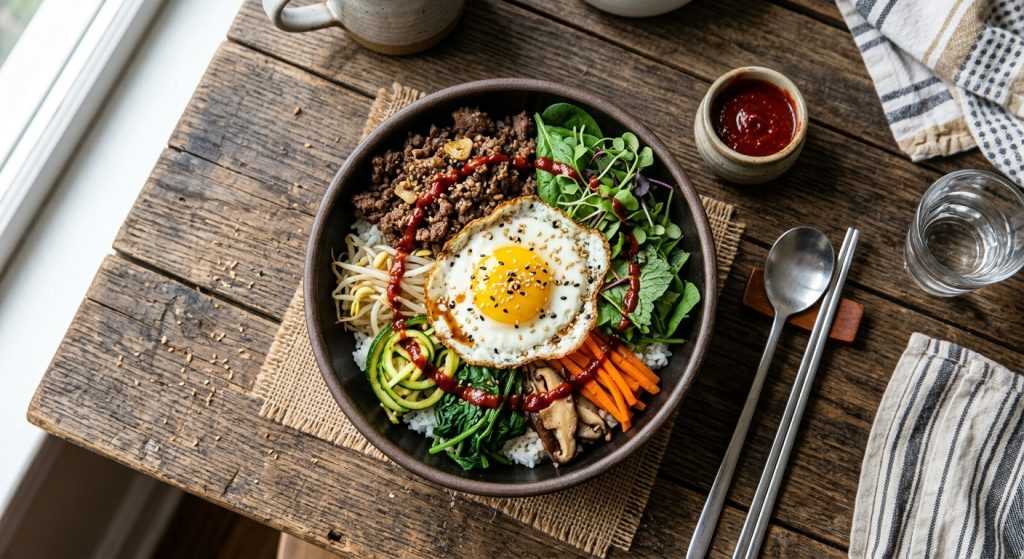
Hey there, friend! If you’re looking for a super speedy, flavor-packed dinner that feels special without all the fuss, these ground beef bibimbap bowls are about to become your new favorite. I’ve been making variations of this for years, and this version is truly a lifesaver on those nights when dinner feels impossible but you still want something satisfying and fresh. It’s got everything—savory beef, tender-crisp veggies, a runny fried egg, and that incredible spicy-sweet sauce that just brings it all together. You won’t believe how quickly it comes together, honestly.
I know what it’s like to be staring at an empty fridge and a clock ticking way too fast. That’s why I worked on this recipe until it was practically foolproof. We’re talking minimal chopping, one skillet for the main mix, and a quick pan-fry for the eggs. The best part? You can totally prep some of the ingredients ahead of time, which makes assembly even faster. Get ready to add this one to your regular rotation because it’s a winner for the whole family, and your taste buds will thank you!
Crafting the Quick Sauce and Sautéing the Beef
Okay, first things first: that incredible sauce. It’s the heart of these bowls, so let’s get it whisked up! Grab a small bowl and combine the gochujang, sesame oil, soy sauce, and rice vinegar. Give it a good whisk until everything is super smooth and evenly mixed. The gochujang is a spicy Korean chili paste, and it adds this fantastic depth and a little kick without being overwhelmingly hot, especially when balanced with the other flavors. If you’re worried about spice for little ones, you can always go a little lighter on the gochujang in the sauce itself and serve extra on the side for the adults. Once it’s all mixed, just set it aside for a moment.
Now, let’s get to the beef. Heat up your biggest skillet over medium-high heat. When it’s hot enough that a drop of water sizzles, add your lean ground beef. Use a wooden spoon or a spatula to break it up into really small pieces as it cooks. You want those little crumbles so they can really soak up all the sauce later. Keep stirring occasionally for about five minutes, or until most of the pink is gone. Lean ground beef usually doesn’t give off a ton of fat, but if you see any pooling in the skillet, go ahead and drain it off. This keeps your bibimbap from getting greasy and helps the sauce stick better to the meat. Nobody wants a greasy bowl!
Adding Layers of Flavor: The Veggie Sauté
With the beef cooked, it’s time to bring in the vegetables! Don’t even bother taking the beef out of the pan. Just toss in your sliced shiitake mushrooms, chopped garlic, and grated ginger right alongside the beef. Give everything a good stir to combine it all. The mushrooms will start to soften and release their moisture, which adds a lovely umami flavor to the whole mix. Keep cooking and stirring for another five minutes or so, until the mushrooms look tender and the garlic and ginger are fragrant – your kitchen is going to smell amazing right about now!
Next, throw in the grated carrots and the roughly chopped baby spinach. Now, this part goes fast! Stir everything together, and you’ll see the spinach wilt down almost instantly. It usually only takes about three minutes until it’s soft and bright green. You don’t want to overcook the spinach, or it can get a bit mushy. As soon as the spinach is looking happy and wilted, pour in that glorious gochujang sauce you whisked up earlier. Stir it all together one last time, making sure every bit of beef and every veggie is coated in that beautiful, glossy sauce. Take it off the heat right away. It’s ready for assembly!
Frying Up the Eggs and Assembling Your Ground Beef Bibimbap Bowls
While your beef and veggie mix is hanging out, you’ll want to get started on the eggs. They are definitely a must-have for these ground beef bibimbap bowls! Grab a large nonstick skillet and heat a little avocado oil (or whatever neutral oil you prefer) over medium-low heat. The trick to perfect fried eggs for bibimbap is a lower heat and covering the pan. Once the oil is shimmering, carefully crack your eggs into the skillet. You want to cook them covered so the whites set nicely while the yolk stays wonderfully runny – that’s the dream for bibimbap!
Let them cook for about four to six minutes. You’ll know they’re ready when the egg whites are completely set and opaque, but the yolk still has that beautiful liquid center. I like to peek after four minutes to check. Once they’re perfect, gently slide them out of the pan. Now for the fun part: assembling your bowls! Grab your serving bowls and start with a generous scoop of cooked white or brown rice at the bottom. Layer on some fresh mixed greens, then pile that savory beef and veggie mixture right on top. Finish each bowl with one of those perfectly fried eggs. A sprinkle of sesame seeds and an extra dollop of gochujang on the side for anyone who loves more spice completes the picture. Enjoy every delicious bite!